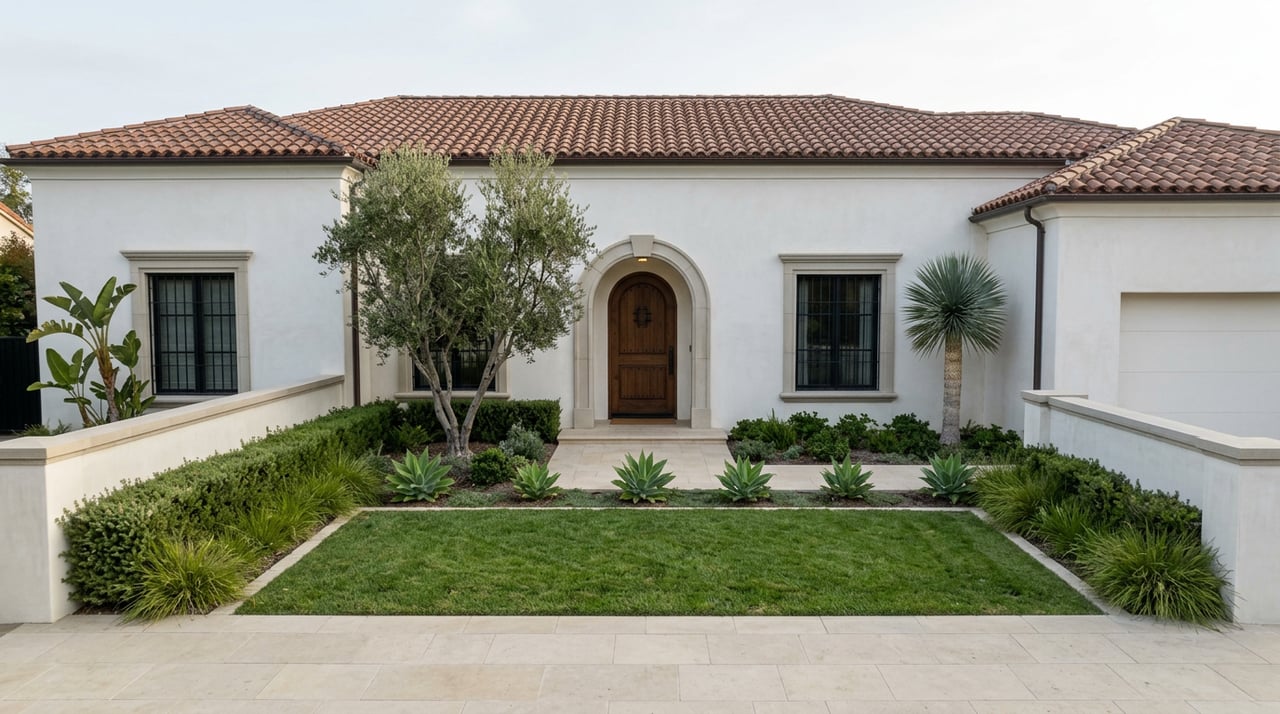
Solana Beach Home Prices: Why Every Site Gives You a Different Number
September 3, 2026
September 3, 2026
Open three tabs on the same afternoon and you get three different Solana Beaches. One shows a median sale price that jumped 62.8 percent in a year, to $2.8 million. Another shows the typical home value down 2.2 percent over that same stretch. A third shows prices holding roughly flat while the price per square foot has fallen 8 to 9 percent. Same zip code, same summer, three stories that cannot all be describing the same market in the same way.
None of these numbers are wrong. That is the part worth sitting with if you are comparing Solana Beach against Encinitas, Cardiff, or Del Mar and trying to figure out what your money actually buys here. The contradiction is not a data error. It is what happens when a very small, very split housing market gets measured by tools built for cities that sell homes by the hundreds every month.
Solana Beach is about three and a half square miles. In any given month, the number of homes that actually close is small enough that a single sale can move the headline number more than any real shift in the market. Add to that the fact that different sites are measuring different things entirely, sold prices versus list prices, medians versus averages, a trailing three-month window versus a live snapshot, and the contradictions stop looking strange. They start looking inevitable.
| Source | Time window | What it reported | What it's actually counting |
|---|---|---|---|
| Trailing sales data | Three months ending April 2026 | Median sale price of $2.8 million, up 62.8% year over year, homes selling in 17 days | Closed transactions only, a small trailing sample |
| Home value index | Rolling estimate, mid-2026 | Typical value of $2,033,073, down 2.2% year over year | A modeled estimate across every home, not just the ones that sold |
| Listing aggregator | May 2026 | Median of $2,000,000, average of $2,461,155 | A blend of active and recently sold listings |
| Live market snapshot | August 2026 | Median list price of $2.04 million, flat year over year, price per square foot down 8 to 9% | Current asking prices, not closed sales |
Read across that table and the pattern is not that Solana Beach is booming or correcting. It is that four legitimate methods of counting the same small city produce four legitimate but different answers, and none of them was built with a market this size in mind.
Most of the national housing tools that generate these numbers were designed for markets where hundreds of homes trade hands monthly, so a handful of unusual sales gets absorbed into the noise. Solana Beach does not have that cushion. When the trailing three months of sales data through April showed a median of $2.8 million, that median came from a batch of homes small enough that a couple of higher-end closings on the bluff or in Santa Fe Hills could pull the whole number up by tens of percentage points without a single comparable home actually appreciating that much.
The reverse is just as true. A month with several condo or townhome closings near Cedros Avenue pulls the median down, again without reflecting any real change in what a bluff-front estate or a Las Vistas home is worth. The city is not one market reacting to one set of conditions. It is two very different housing stocks sharing a zip code, and whichever one happens to transact more in a given window determines what the headline says that month.
This is also why a rolling value index and a live listing snapshot can point in opposite directions in the same season. One is estimating value across every home whether or not it sold. The other is only showing what sellers are asking for right now. Neither is lying. They are answering different questions.
The coastal core, the stretch that runs from the bluff at Fletcher Cove through Cedros Avenue and the train station, is also where the city's condo and townhome stock concentrates, simply because that is where the land ran out first. It still holds a handful of the priciest bluff-front estates in the city, and a single one of those sales is exactly the kind that can swing a median on its own. This coastal core is also the part of the city that has changed the most in the last few years. Cedros Design District now holds more than 85 merchants along a stretch that used to be considered a side errand rather than a destination. Claire's on Cedros is still the standing breakfast order for the salmon cake Benedict and short rib hash. Lofty Coffee and Pannikin cover the morning coffee run before the Sunday Farmers Market. Newer full-service dinner spots like Rare Society and Rustic Root have started taking reservations the way restaurants in Del Mar always have, which is a genuine shift for a corridor that used to close early. Belly Up Tavern still anchors the evening end of the block, and the design district itself, with SoLo and Lotus running their warehouse-style vendor spaces and Aaron Chang Ocean Art Gallery, Kogei Gallery, Madison Gallery, and Carruth Cellars Urban Winery filling out a ten-minute stroll, has enough going on now that it functions as a full afternoon rather than a stop on the way somewhere else.
Every Memorial Day weekend makes the split visible in one place. The Solana Beach Chamber of Commerce's Fiesta del Sol returned to Fletcher Cove this year on May 30 and 31 for its 45th run, with music curated by Belly Up and a lineup that included Los Lobos and The English Beat, drawing a crowd that typically clears 30,000 across the two days. What changed this year is that Cedros Design District joined in formally, with bands on the street and shopping specials of its own, extending a festival that used to live entirely at the water up the hill into the design district.
Inland, past the freeway, the detached single-family stock is more common. Santa Fe Hills and the gated community of Las Vistas both trade in single-level ranch homes on larger lots, the kind of listings that mention vaulted ceilings and renovated interiors, and those homes turn over far less often than anything near the coast.
That geography matters for pricing, not just for a weekend out. A buyer moving from a single-family-dominant city like Encinitas or Cardiff and shopping the coastal core of Solana Beach will run into HOA or PUD dues that simply do not exist on most Cardiff or Old Encinitas listings, and those older bluff-adjacent complexes can carry meaningfully higher dues than a newer development inland. That cost does not show up in any median price headline. It shows up on the closing statement.
A single bluff-front sale can move the median more than a full quarter of condo closings put together, which is exactly why the median alone cannot tell you what your money buys here.
If you are pricing a purchase or a listing in Solana Beach right now, the headline median is the least useful number available to you. What actually holds up:
Is Solana Beach a buyer's market or a seller's market right now? The honest answer is that citywide labels do not hold up well here. The detached single-family stock inland in Santa Fe Hills and Las Vistas behaves like a tight, low-inventory market because so few of those homes trade in a given year. The coastal core around Cedros and the bluff moves differently, with more frequent condo and townhome turnover alongside the occasional high-value estate sale that can distort the whole picture on its own. Ask the question about a specific segment, not the city as a whole.
Why does one source show a huge price jump and another show a decline in the same year? Because they are counting different things. A trailing three-month window built on closed sales will always be more volatile than a rolling value index that smooths its estimate across every home in the city, and in a market as thin as Solana Beach, that volatility can look like a swing of 60 percentage points in either direction without any of it reflecting a real change in what homes are worth.
If you are trying to make sense of what a specific Solana Beach property is actually worth, or what it would take to compete for one, a citywide median will not get you there. The O'NEIL GROUP works this market segment by segment, bluff-front and Cedros corridor alike, and can walk you through what the comparable sales in your specific pocket of Solana Beach are actually showing right now.
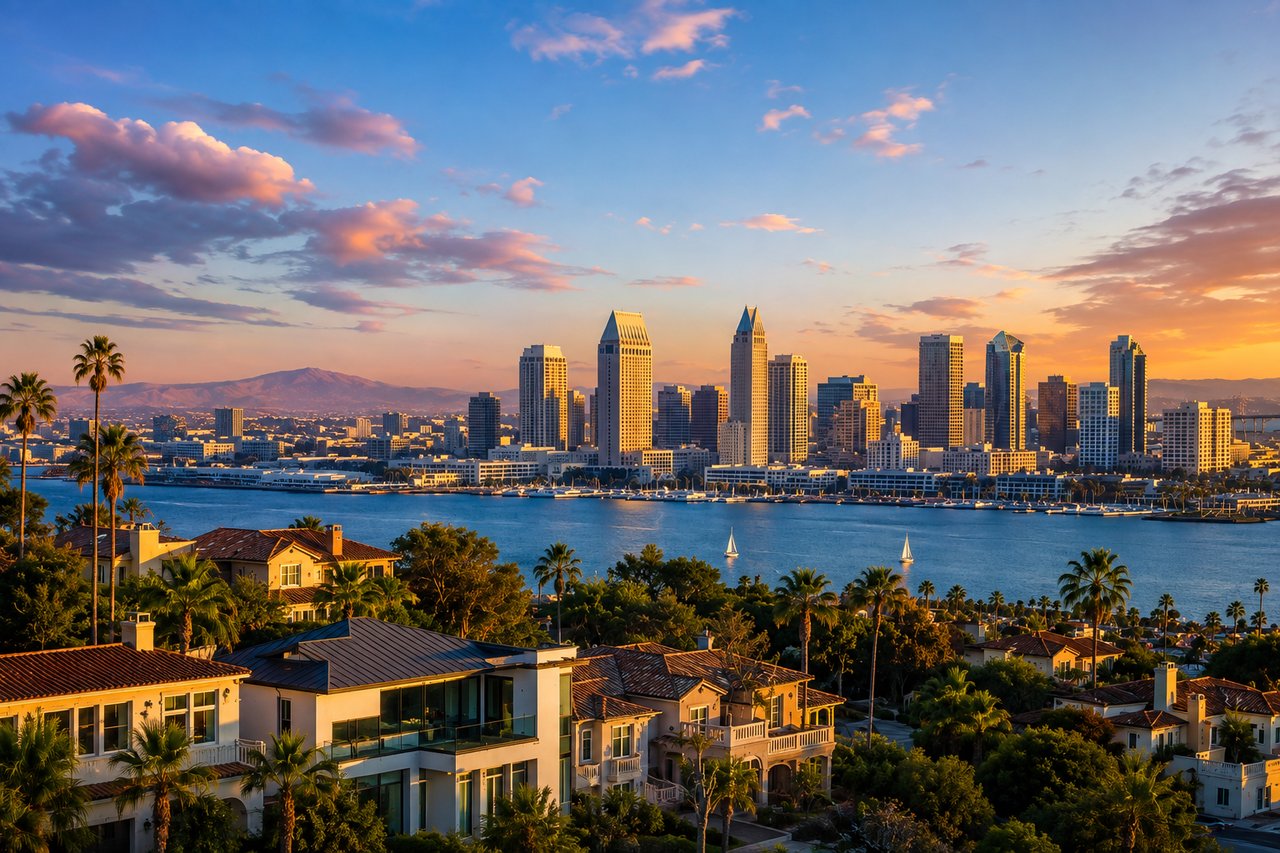
San Diego Real Estate Market
The latest San Diego housing market data reveals what every homeowner should know about inventory, home prices, buyer demand, and whether now is the right time to sell.
Real Estate
We're excited to connect with you and help you achieve your real estate goals. Whether you have questions about buying, selling, or investing, or you simply want to learn more about our services, we're here to provide the information and guidance you need. Let's connect today!